How Often Do I Need to Chink My Home?
What "Rechinking" Actually Means — And What It Doesn't
Most log homes need a full chinking inspection every 2–3 years and a partial or full log home rechinking every 7–10 years under normal conditions. If you're seeing white stuff between logs falling out, gaps in your log cabin walls getting bigger, or your log cabin drafty in winter, your rechinking schedule is already overdue.
What "Rechinking" Actually Means — And What It Doesn't
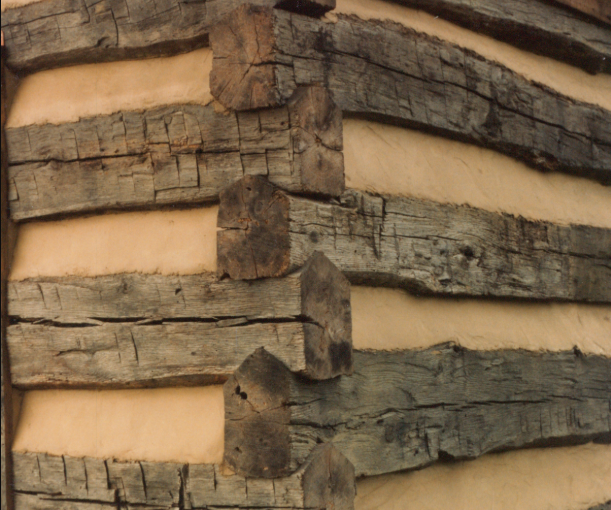
Rechinking is not the same as touching up a few spots with a caulk gun. Full rechinking means removing all failed material, cleaning the bond surface, installing fresh backer rod where needed, and applying a continuous elastomeric chinking bead across every log course joint — top and bottom bond lines included.
Spot rechinking addresses isolated failures — sections where the chinking has pulled away from the log surface, crumbled, or been compromised by impact, insect activity, or moisture intrusion. It's appropriate only when the surrounding system is still sound and bonding correctly.
The mistake most Texas log home owners make is confusing cosmetic appearance with structural performance. Chinking that looks intact on the surface can be failing at the bond line — and you won't know until you press it and feel it flex away from the log.
How Often Should You Rechink a Log Home in Texas Hill Country
In Central Texas, the honest answer is more often than the national average — and the reason comes down to climate physics.
Why Texas Heat and UV Exposure Accelerates Chinking Failure
Texas sun destroys unprotected chinking faster than almost any other climate in the country. South- and west-facing walls in the Austin, San Antonio, Fredericksburg, and Marble Falls corridors regularly see log surface temperatures above 150–160°F in July and August — temperatures that exceed the thermal tolerance of lower-grade chinking products within a single season.
UV degradation breaks down the elastomeric compounds in chinking the same way it cracks rubber seals and fades exterior paint. Once elasticity is gone, the chinking can no longer flex with the natural expansion and contraction of your logs — and bond line separation follows.
How Texas Humidity Swings Stress Your Log Wall System
Unlike the steady moisture of the Pacific Northwest or the dry cold of Montana winters, Central Texas delivers brutal humidity whiplash — weeks of drought-level dryness followed by days of Gulf moisture and driving rain.
This cycle forces your logs to expand and contract repeatedly across a wider moisture range than logs in more stable climates ever experience. Every expansion-contraction cycle is a mechanical stress test on your chinking bond. NLHA best practices account for this by recommending more frequent inspection intervals in high-thermal-swing environments — which Texas qualifies for emphatically.
The Log Home Rechinking Timeline: What to Expect at Every Stage
Understanding where your property is in its log home maintenance cycle helps you budget and plan — before an emergency forces the decision for you.
Years 1–3: The New Chinking Settling Period
Fresh chinking on a newly built or recently rechinked log home enters its most critical bonding phase immediately. During this window:
- Log checking (longitudinal surface cracks) continues to develop as logs finish drying to equilibrium moisture content
- Settling is still occurring in homes under 5–7 years old — settling space above doors and windows must remain clear and unobstructed
- Annual visual inspections are essential — not because failure is expected, but because catching an early bond line separation in year two is a 20-minute repair versus a full-wall project in year five
Years 4–7: The Performance Window
A properly installed chinking system using quality products like Perma-Chink or Energy Seal over correctly sized backer rod should perform without major intervention during this period under normal conditions.
"Normal conditions" in Texas, however, means:
- Annual inspection of south- and west-facing elevations after summer
- Checking end-grain sealing on all log ends at butt corners and gable ends after the first hard rain season
- Monitoring base logs for moisture content readings above 19% — the threshold where fungal decay becomes an active risk
- Watching for hairline separation at bond lines on high-UV walls
Years 7–10: The Rechinking Decision Window
By year 7 to 10, most log homes in Central Texas will show at least partial chinking failure on their most exposed elevations — even with good original installation and a quality product.
This is the window where a professional assessment from a qualified contractor pays for itself many times over. A log checking gauge inspection combined with moisture content readings across multiple log courses will tell you exactly which walls need full rechinking, which need spot repair, and which can safely wait another inspection cycle.
Years 10 and Beyond: Full System Evaluation
A log home that reaches the 10-year mark without a professional rechinking evaluation is statistically likely to have active moisture infiltration, bond line failure on at least one elevation, and the early stages of log checking progressing into structural checking on high-stress corner logs.
At this stage, the scope of work expands beyond chinking alone — it typically includes end-grain sealing, log surface cleaning and re-staining, and in some cases, assessment for log rot at base courses and butt-and-pass corner notch integrity.
Warning Signs Your Rechinking Timeline Has Already Passed
Don't rely on a calendar alone. Your log home will show you physical indicators that rechinking is overdue — if you know what to look for.
Watch for these red flags on your next walkthrough:
- Chinking pulling away from the log surface on one or both bond edges — even a 1/16-inch gap is an active water and air pathway
- Chalky, powdery, or crumbling chinking material — the elastomeric compound has oxidized and lost flexibility entirely
- Dark water staining below chinking joints or window and door log frames
- Gray or silvered log surfaces on south and west walls — UV degradation of the log finish that is now attacking the chinking bond
- Drafts at interior wall surfaces on windy days — air is transiting the wall system through failed joints
- Insects entering through chinking joints — carpenter ants and wood-boring beetles in the Hill Country do not create entry points, they use the ones already open
- Interior drywall staining or baseboard warping near exterior log walls — exterior chinking failure has progressed to interior water infiltration
How Rechinking Frequency Affects Your Insurance Coverage and Home Value
This is the conversation most log home owners never have with their contractor — and it costs them when they file a claim.
Insurance adjusters handling storm damage, wind-driven rain intrusion, or sudden structural failure on a log home will request maintenance records. A home with documented inspection history, professional moisture content readings on file, and a written rechinking scope of work from a licensed log home contractor demonstrates due diligence — and that documentation is often the deciding factor between a covered claim and a denial based on "long-term neglect."
Beyond insurance, a professionally maintained chinking system is a direct line item in the appraised value of your log home. Buyers, lenders, and inspectors reviewing a log home in the New Braunfels, Wimberley, or Dripping Springs market are increasingly sophisticated about log home condition — and a documented maintenance history from Wood & Son Log Homes & Contracting is a tangible asset at closing.
The Texas Log Home Rechinking Schedule at a Glance
Use this as your baseline — adjust based on your home's specific elevation exposure, log species, and original installation quality:
Every year: Visual inspection of all chinking joints, end-grain condition, and base log moisture levels
Every 2–3 years: Professional inspection with moisture content readings and bond line assessment on all four elevations
Every 5–7 years: Spot rechinking and end-grain resealing on high-exposure walls
Every 7–10 years: Full professional rechinking evaluation; partial or full rechinking based on assessment findings
Immediately: Any time you observe active water intrusion, bond line separation exceeding 1/8 inch, soft or punky log ends, or insect activity at chinking joints
Your Next Step Before This Gets Worse
Your log home is one of the most unique and valuable investments you'll ever make — don't let a small gap or failing chink line turn into a five-figure repair.
Call Wood & Son Log Homes & Contracting at (254) 541-1122 for a free log home assessment today.
We bring moisture meters, photographic documentation, and 15 years of hands-on log preservation experience to every assessment — and we'll give you a straight answer about what you're dealing with, what it will cost to fix it, and what your insurance documentation options look like.
Don't wait 30 days.
The logs won't.
Recent Posts